

Durable Miraculous Medal Bracelet Quality Guide
Table of Contents
- What Is a Miraculous Medal and Why Wear It Daily?
- Best Material for Religious Bracelets: What Lasts
- How to Clean Miraculous Medal Jewelry Without Damage
- Sizing and Fit: Finding the Right Bracelet for Every Wrist
- Eleanor June Miraculous Medal Bracelets: Quality Meets Mission
- Allergy and Sensitivity: What to Check Before You Buy
- Repair and Restoration: Making Your Bracelet Last for Years
- Conclusion: Choosing a Bracelet That Endures
- Frequently Asked Questions
Last Updated: September 30, 2026
What Is a Miraculous Medal and Why Wear It Daily?
A Miraculous Medal is a small devotional medal struck with the image of the Virgin Mary, worn by Catholics as a reminder of her protection and intercession. The devotion traces to 1830, when Catherine Labouré, a novice in Paris, reported a vision of Mary standing on a globe with rays of light streaming from her hands. A durable miraculous medal bracelet quality depends on the metal, the clasp, and the finish.
Best Material for Religious Bracelets: What Lasts
The best material for religious bracelets balances tarnish resistance, skin comfort, and a finish that holds its shine. No single metal wins on every count, so the right pick depends on how often the bracelet gets worn and by whom.
| Material | Tarnish Resistance | Skin Sensitivity | Best For |
|---|---|---|---|
| 14k gold plated | Good with care | Low when lead and nickel free | Everyday wear, gifting |
| Sterling silver | Needs polishing | Low, but some react to it | Polished, classic look |
| Gold vermeil | Good, thicker plating | Low | Heirloom-style pieces |
| Stainless steel | Excellent | Very low | Rough daily wear, kids |
Gold Plated vs. Sterling Silver vs. Stainless Steel
Gold plated jewelry carries a thin layer of gold over a base metal. It looks warm and polished and costs far less than solid gold, but plating wears thin over time, especially on clasps and chain links that rub against skin. Sterling silver is 92.5% pure silver; it polishes beautifully but tarnishes when exposed to sulfur in the air. Stainless steel resists tarnish and water better than either, though it looks cooler and more industrial.
What actually wears out first (and why)
Durability is a set of failure points, and knowing which hits first tells you what to look for.
- The clasp. On a bracelet worn daily, the clasp usually fails before the chain does. A lobster claw clasp with a solid, well-sprung mechanism outlasts a cheap spring-ring every time. The spring in a low-quality clasp loses tension within months, and the bracelet starts slipping off the wrist.
- The chain links nearest the clasp. These rub against skin and fabric more than any other link, so plating thins there first and the base metal shows through.
- The jump rings connecting the medal. A medal swinging freely on a thin jump ring can work it open over time; a soldered or thicker jump ring holds.
- The enamel surface. Enamel is durable, but a sharp impact can chip it, and once chipped it cannot be repaired at home.
A 6-month wear test: what actually happens
Most reviews are written the day the bracelet arrives, which tells you almost nothing about durability. Here is a realistic six-month wear pattern on a 14k gold plated bracelet worn most days:
- Months 1-2: The bracelet looks new, plating intact, clasp snapping firmly, enamel glossy.
- Months 3-4: Slight dulling appears on the links closest to the clasp from skin oils and friction; a quick wipe after each wear prevents buildup.
- Months 5-6: On a well-made piece, plating is intact but may show a faint warmth shift at the clasp. On a poorly made piece, base metal shows through at the same spot.
Matching the metal to the wearer
- A child receiving a First Communion or Baptism gift: Stainless steel or a hypoallergenic gold-plated chain with a secure clasp. Young skin is more reactive, and children are harder on jewelry.
- An adult wearing it daily: 14k gold plated or gold vermeil, with a lobster claw clasp and a soldered jump ring.
- An heirloom piece: Solid gold or gold vermeil. Plated pieces are wearable and giftable, but not heirlooms.
How to Clean Miraculous Medal Jewelry Without Damage
Cleaning miraculous medal jewelry safely means matching the method to the finish. A plated chain, a cloisonné enamel medal, and freshwater pearls each fail differently, and the wrong cleaner damages one while leaving the others untouched. "Mild soap and water" is the right starting point, but not enough once your bracelet has colored enamel or stone accents. Identify three zones, the metal (chain, clasp, medal rim), the enamel or cloisonné (the colored image of Mary), and any beads or pearls, and handle each separately.

Cleaning the metal (chain, clasp, medal rim)
- Fill a small bowl with lukewarm water and one drop of mild dish soap.
- Soak the metal-only portions for two to three minutes, agitating gently with your fingers, not a brush.
- Rinse under lukewarm running water, pat dry with a soft, lint-free cloth, and air dry fully before wearing or storing.
Skip ultrasonic cleaners, jewelry dips, and toothpaste. All three are too aggressive for plated finishes. Ultrasonic vibration can also loosen enamel that has already developed a hairline crack.
Cleaning enamel and cloisonné without dulling the color
Enamel is fired glass, and cloisonné is enamel held inside thin metal wire cells. The color is durable, but the surface scratches and the wire cells trap soap residue that dulls the image.
- Use a cotton swab barely dampened with lukewarm water. Wring it out so it is not dripping.
- Wipe the enamel in one direction, not in circles. Circular motion pushes grit into the wire cells.
- Do not soak an enamel medal for more than about 30 seconds. Prolonged soaking can wick moisture under the enamel edge.
- Never use a polishing cloth, baking soda, vinegar, or toothpaste on enamel. The abrasive compound that restores metal shine will scratch the colored surface permanently.
- Dry the enamel immediately with a soft cloth. Do not let water sit in the recessed cells.
Cleaning pearls and natural stone beads
Pearls are soft and porous. They should never be soaked or touch dish soap, which strips their natural luster.
- Wipe pearls with a dry, soft cloth after each wear to remove skin oils.
- If they look dull, use a pearl-safe cloth only, not the cloth you used on the metal.
- Store pearls away from the metal chain so the clasp does not scratch them.
Drying and storage
Moisture is the single biggest cause of dulling and tarnish. After cleaning:
- Pat every zone dry with its own soft cloth.
- Let the bracelet air dry on a flat surface for at least an hour before boxing it.
- Store it in its gift box or a soft pouch with the clasp closed, which limits both air and moisture.
Sizing and Fit: Finding the Right Bracelet for Every Wrist
Correct wrist sizing comes down to one measurement plus breathing room. Wrap a soft tape measure snugly around the wrist bone, note the number, then add roughly half an inch for comfort. A bracelet that sits flush against the skin will pull, twist, and wear faster at the clasp.
Adult Sized Miraculous Medal Bracelet →
- Baptism bracelet: 4.5 inches with a 1-inch extender
- First Communion and flower girl bracelet: 5.5 inches with a 1-inch extender
- Adult bracelet: 6.5 inches with a 1-inch extender
Eleanor June Miraculous Medal Bracelets: Quality Meets Mission
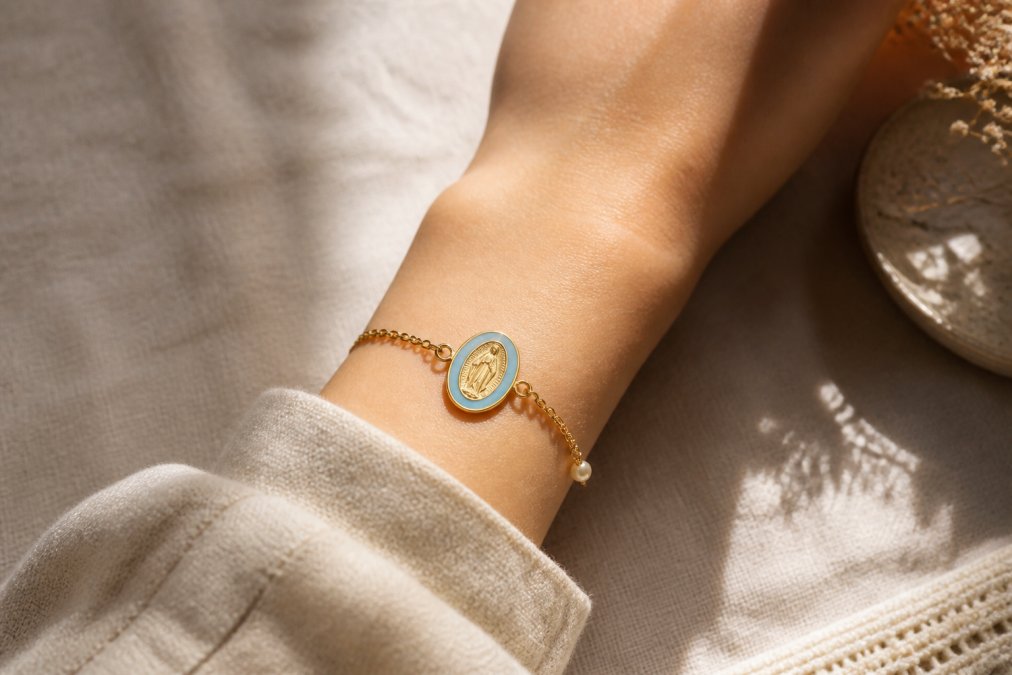
Eleanor June builds its collection around one idea: a faith gift should be worn, not stored. Each bracelet pairs a classic Miraculous Medal centerpiece with delicate enamel or pearl accents on a 14k gold plated chain, finished with a lobster claw clasp and sized for real wrists.

Allergy and Sensitivity: What to Check Before You Buy
Metal sensitivity is the most common reason a bracelet ends up unworn. Nickel is the usual culprit, and it hides in the base metal under gold plating, so a piece can look fine and still cause a reaction once the plating wears at the clasp.
Before you buy, check three things:
- Nickel and lead free: Look for this stated plainly, not implied. "Hypoallergenic" alone is a marketing word with no legal definition.
- Plating type: Gold plated, gold filled, and gold vermeil behave differently against skin. Gold filled and vermeil carry more gold and generally cause fewer reactions.
- Clasp material: The clasp touches skin constantly. A nickel-free clasp matters as much as a nickel-free chain.
Repair and Restoration: Making Your Bracelet Last for Years
Most bracelet failures are repairable, and knowing which parts fail helps you decide whether to fix or replace.
| Problem | Likely Cause | Fix |
|---|---|---|
| Clasp won't stay closed | Worn spring mechanism | Replace clasp at a jeweler |
| Chain link broken | Snagged on fabric | Solder or replace link |
| Plating worn at clasp | Friction against skin | Replate, or accept patina |
| Enamel chipped | Impact or harsh cleaner | Professional enamel repair |
| Medal scratches | Stored loose with other jewelry | Polish and store separately |
Conclusion: Choosing a Bracelet That Endures
Durability in a Miraculous Medal bracelet is not a single feature. It is the sum of metal choice, clasp quality, correct sizing, and the care routine you actually follow. Get those four right and the piece stays wearable for years, the whole point of a devotional gift.
Frequently Asked Questions
What is the most durable material for a Miraculous Medal bracelet?
14k gold plated over a hypoallergenic base offers lasting shine and durability for daily wear. For a bracelet that sees everyday use, look for tarnish-resistant finishes and hypoallergenic materials. Eleanor June's bracelets use 14k gold plating and are 100% hypoallergenic, lead and nickel free, making them a practical choice for sensitive skin.
How do I clean and maintain my Miraculous Medal bracelet?
Clean your bracelet gently with a soft cloth and mild soap in lukewarm water, then dry thoroughly. Avoid harsh chemicals, chlorine, and abrasive cleaners that can strip gold plating or damage enamel. For sterling silver, use a polishing cloth to remove tarnish. Store your bracelet in a dry pouch or jewelry box when not wearing it. Remove it before swimming, showering, or applying lotions and perfumes. Regular gentle cleaning preserves the polished finish and extends the life of the medal and chain.
Is it okay to wear a Miraculous Medal bracelet every day?
Yes, many Catholics wear their Miraculous Medal bracelet daily as a reminder of faith and devotion. The key is choosing a durable design with tarnish-resistant materials and a secure clasp. Bracelets with lobster claw clasps and hypoallergenic metals hold up well to everyday wear. Remove your bracelet during activities that could snag or damage it, such as heavy cleaning or sports. With proper care, a quality bracelet can remain beautiful for years and become a cherished devotional piece.
How can I tell if a Miraculous Medal bracelet is high quality?
Check the materials, construction, and finish. High-quality bracelets use hypoallergenic metals, secure clasps like lobster claw, and even gold plating or sterling silver. The medal should have clear, detailed imagery and a polished finish without rough edges. Look for tarnish-resistant properties and weight that feels substantial but comfortable. Eleanor June's bracelets are 14k gold plated, measure 6.5 inches with a 1-inch extender for adults, and come gift-boxed, reflecting attention to quality and presentation.
Are stainless steel Miraculous Medal bracelets better than precious metals?
14k gold plating provides a classic look and lasting value. For meaningful gifts and long-term keepsakes, gold-plated options are often preferred. Consider the recipient's lifestyle and how often the bracelet will be worn.